Rental Tenancy Agreement Template in Pakistan

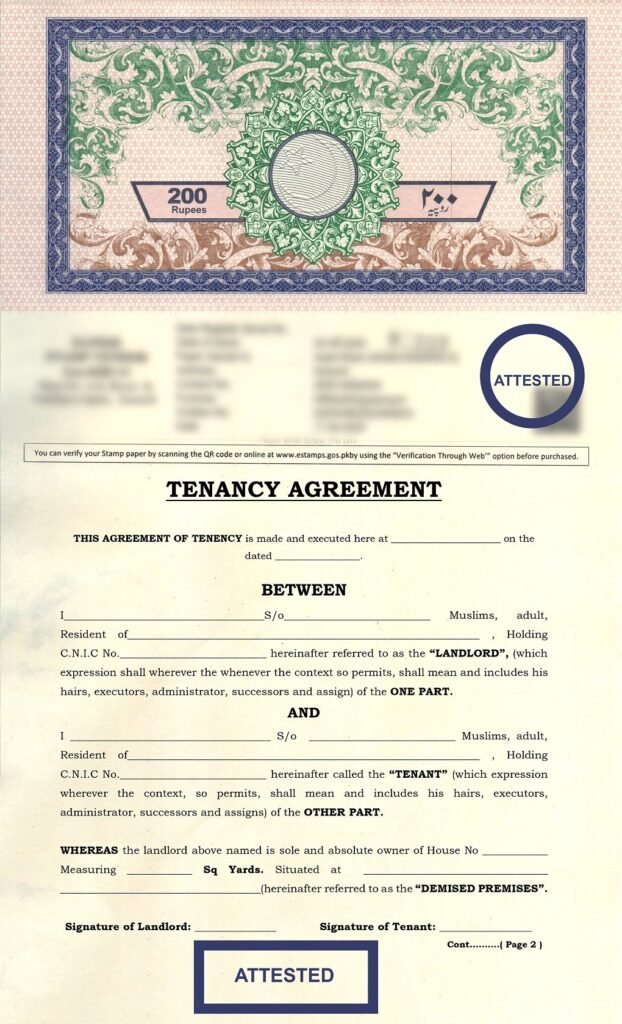
TENANCY AGREEMENT / RENT AGREEMENT
THIS AGREEMENT OF TENANCY is made and executed here at ______________________ on the dated _________________.
BETWEEN
I_____________________________________S/o___________________________ Muslims, adult, Resident of___________________________________________________________ , Holding C.N.I.C No.___________________________ hereinafter referred to as the “LANDLORD”, (which expression shall wherever the whenever the context so permits, shall mean and includes his hairs, executors, administrator, successors and assign) of the ONE PART.
AND
I _____________________________________ S/o ___________________________ Muslims, adult, Resident of________________________________________________________ , Holding C.N.I.C No.___________________________ hereinafter called the “TENANT” (which expression wherever the context, so permits, shall mean and includes his hairs, executors, administrator, successors and assigns) of the OTHER PART.
WHEREAS the landlord above named is sole and absolute owner of House No ____________ Measuring ____________ Sq Yards. Situated at __________________________________ _____________________________________(hereinafter referred to as the “DEMISED PREMISES”.
Signature of Landlord: ______________ | Signature of Tenant: ________________ Cont……….( Page 2 ) |
(Page 2)
TERMS AND CONDITIONS OF TENANCY AGREEMENT:
- That the rent of the demised premises has been fixed at Rs._______________________________ /-(Rupees _____________________________________________________________ only) per month, which shall be paid by the tenant in End for each and every month up to the __________ day of every month, positively and without any fail.
- That the tenant has deposited an amount of Rs. _______________________________ /-(Rupees _________________________________________________________________________ only) being the fixed security deposit money in respect of the tenancy of the said premises, which amount shall be refunded by the landlord to the tenant, at the time of peaceful vacation of the said premises as and when the occasion may arose, subject to the adjustment of any loss/damages or dues if any.
- That the tenancy agreement is effective for _____________ With effect from ________________________To ________________________ and which shall be renewal with the mutual consent of the both parties.
- That in case the tenant fails to pay the monthly rent of the said premises to the landlord for two consecutive months, he shall render himself to be ejected from the said premises.
- That the tenant shall not alter/changes the existing structure/construction of the said premises or any part thereof.
- That the tenant shall pay the Electric Charges, Telephone and Sui Gas, Water and Sewerage, City District Government Bills of the demised premises regularly and shall provide copy of the bills to the landlords.
- That the tenant shall not sub-let the said premises or any portion thereof to any person(s) is any circumstances without written consent of the landlord.
- That the tenant shall keep the said premises is good and sanitary condition.
- That the tenant shall be increased @ ________ % per annum with the same terms and conditions if agreed by the landlord.
- That the tenant shall permit the said landlord or his servants and workmen at all responsible times, after receiving responsible notice to enter the said premises and inspect the state and condition thereof and to do all repairs as may be necessary.
- That major repairs of the premises will be carried out by the landlord and the minors’ repairs by the tenant.
- That 01 months/day notice in advance shall be required by from either party for the vacation of the said premises.
- That on the expiry of the contractual period of the tenancy, the tenant shall hand over the vacant and peaceful possession of the said demised premises to the landlord in the same condition in which it is on the date of the presents (except normal wear and tear and natural calamities).
IN WITNESS WHEREOF the parties hereto have set and subscribe their respective hands at_____________ on the day, month and the year first above mentioned.
| Witness: 1 Signature: _____________________ Name: _________________________ S/o: ___________________________ CNIC No._______________________ | LANDLORD Signature: _____________________ Name: _________________________ S/o: ___________________________ CNIC No._______________________ |
|
Witness: 2
Signature: _____________________ Name: _________________________ S/o: ___________________________ CNIC No._______________________ |
TENANT
Signature: _____________________ Name: _________________________ S/o: ___________________________ CNIC No._______________________ |
Key Takeaways for Tenancy Agreements in Pakistan
A Written Agreement is Legally Required
Verbal agreements are not recognized by the courts in most provinces (like Punjab) and offer no legal protection. A written agreement is the single most important document to protect both the landlord and the tenant.
Registration is Mandatory (in most cases)
In provinces like Punjab, it is a legal requirement for the landlord to register the tenancy agreement with the local Rent Registrar. Failure to do so can result in fines for both parties and, more importantly, the Rent Tribunal will not hear your case until you pay the penalty.
Stamp Paper is Essential for Validity
The agreement must be executed on non-judicial stamp paper of the appropriate value (calculated based on the rent and duration). An agreement on plain paper may not be admissible as evidence in court.
Police Verification is a Must
It is a mandatory security requirement for the landlord to submit the tenant’s details to the local police station for verification. Failure to do so is a punishable offense.
Provincial Laws are Supreme
Tenancy laws are a provincial subject. The laws in Punjab (Punjab Rented Premises Act, 2009) are different from those in Sindh (Sindh Rented Premises Ordinance, 1979). Your agreement must follow the specific laws of the province where the property is located.
“No Agreement” Means “No Rights”
If you don’t have a written agreement, you have almost no legal standing. A landlord cannot legally evict a tenant, and a tenant cannot challenge a rent increase or an eviction.
Clarity is Your Best Protection
The agreement should be crystal clear. It must explicitly state the rent amount, due date, duration, rent increase percentage (e.g., “10% increase upon renewal”), and who is responsible for which repairs (landlord for major, tenant for minor).
Eviction is a Legal Process
A landlord cannot simply change the locks or cut off utilities to evict a tenant, even if the tenant has not paid rent. The landlord must file a case with the Rent Tribunal and get a formal eviction order based on specific legal grounds (like non-payment, personal need, etc.).
The Security Deposit is Not Rent
The security deposit is held by the landlord as a guarantee against damages to the property. It cannot be used by the tenant as the last month’s rent. The landlord must return it after the tenant vacates, minus any deductions for legitimate repairs.
Renewal is Not Automatic
When a fixed-term agreement (e.g., 6 or 11 months) ends, the landlord is not legally required to renew it. The expiry of the term is a valid reason for the landlord to ask the tenant to leave.
FAQS
Can I download a tenancy agreement for free?
Yes, you can download free templates for tenancy agreements (also known as rent agreements or ‘kirayanama’) from Pak Agreement Site. However, it is strongly recommended to have any template reviewed by a legal professional to ensure it complies with your specific provincial laws (e.g., Punjab Rented Premises Act, Sindh Rented Premises Ordinance) and fully protects your interests.
What is your tenancy agreement?
A tenancy agreement is a legally binding written contract between a landlord (owner) and a tenant (person renting) that outlines the terms and conditions for renting a property. It is the most important document in a landlord-tenant relationship as it defines the rights and responsibilities of both parties under the law.
What is included in a tenancy agreement?
A comprehensive tenancy agreement in Pakistan should include:
Full details of the landlord and tenant (Names, CNIC numbers, addresses).
A complete description of the rental property.
The duration of the tenancy (start and end date).
The monthly rent amount, the due date for payment, and the method of payment.
The amount of the security deposit and the conditions for its refund.
Any agreed-upon rent increase rate (e.g., 10% annually).
The purpose of the tenancy (i.e., residential or commercial).
Obligations of both parties (e.g., who pays utilities, responsibility for repairs).
Conditions for termination and renewal of the agreement.
How to write a tenancy agreement?
To write a tenancy agreement, you should:
Gather all the key details (of parties, property, rent, and duration).
Clearly draft all the terms and conditions (as listed above).
Print the agreement on non-judicial stamp paper of the appropriate value.
Have both the landlord and tenant sign the agreement, along with at least two witnesses.
In provinces like Punjab, it is mandatory to register the agreement with the local Rent Registrar.
Can I create my own tenancy agreement?
Yes, you can create your own tenancy agreement, either by writing one from scratch or by using a free template. However, you must ensure that the agreement is on the proper stamp paper and that all its clauses are in full compliance with the provincial tenancy laws applicable to your property, otherwise, it may not be enforceable in a court.
What happens when there is no tenancy agreement?
A verbal tenancy agreement is not recommended and is illegal in provinces like Punjab. Without a written agreement, it becomes extremely difficult for both parties to prove their case in a dispute. A landlord will struggle to evict a tenant or prove the rent amount, while a tenant cannot protect themselves from a sudden rent increase or an unfair eviction. In Punjab, a Rent Tribunal will not even hear a case without a registered written agreement (or payment of a fine).
How to write up a simple agreement?
A simple agreement must contain the bare essentials to be valid. This includes:
Parties: Full names and CNIC numbers of the landlord and tenant.
Property: The address of the property being rented.
Term: The start date and end date of the tenancy.
Rent: The monthly rent amount and the due date.
Signatures: Signatures of the landlord, tenant, and at least one witness for each.
Who can write me a tenancy agreement?
A tenancy agreement can be written by the landlord, the tenant, a real estate agent, or a lawyer. It is highly recommended to hire a lawyer or a professional document writer to draft the agreement to ensure it is legally correct and covers all necessary points according to your provincial laws. You also reach us we will draft a legal tenancy agreement for your requirement.
What if I don’t have a tenancy agreement?
If you don’t have a written tenancy agreement, you are in a very vulnerable legal position. As a tenant, you have little protection against your landlord’s claims or actions. As a landlord, you will find it incredibly difficult to enforce any terms, recover unpaid rent, or legally evict the tenant through the Rent Tribunal.
What happens when my 6 month tenancy agreement ends?
When your 6-month fixed-term agreement ends, the tenancy is legally over. You have three main options:
You can move out and hand over possession to the landlord.
You and the landlord can sign a new agreement to renew or extend the tenancy.
If you stay and the landlord accepts the next month’s rent without a new agreement, the tenancy automatically becomes a periodic (month-to-month) tenancy, which can then be terminated by either party by giving the required notice (usually one month).
Can a landlord refuse to renew a tenancy agreement?
Yes, a landlord is under no legal obligation to renew a tenancy agreement once the fixed term has expired. The expiry of the agreed-upon period is, in itself, a valid legal ground for the landlord to ask the tenant to vacate the property.
What is the duration of a tenancy agreement?
The duration of a tenancy agreement can be for any period mutually agreed upon by the landlord and tenant. In Pakistan, it is very common to make agreements for 11 months. This is often done to avoid the requirement of registering the lease under the Registration Act, 1908, which becomes mandatory for leases of one year or more (though provincial laws like in Punjab may require registration regardless of duration).
What are the 7 permitted grounds to end a tenancy?
While specific grounds vary slightly by province, the 7 most common, legally permitted grounds for a landlord to evict a tenant in Pakistan are:
Expiry of the Agreement: The fixed-term tenancy agreement has ended.
Non-payment of Rent: The tenant has failed to pay the rent within the grace period.
Subletting: The tenant has rented out the property to someone else without the landlord’s written permission.
Property Damage: The tenant has caused significant damage to the property.
Misuse of Property: The tenant is using the property for a purpose other than what was agreed (e.g., commercial activity in a residential property).
Nuisance: The tenant is causing a persistent disturbance or nuisance to neighbours.
Landlord’s Personal Need: The landlord requires the property in “good faith” for their own personal use or for their spouse or children.